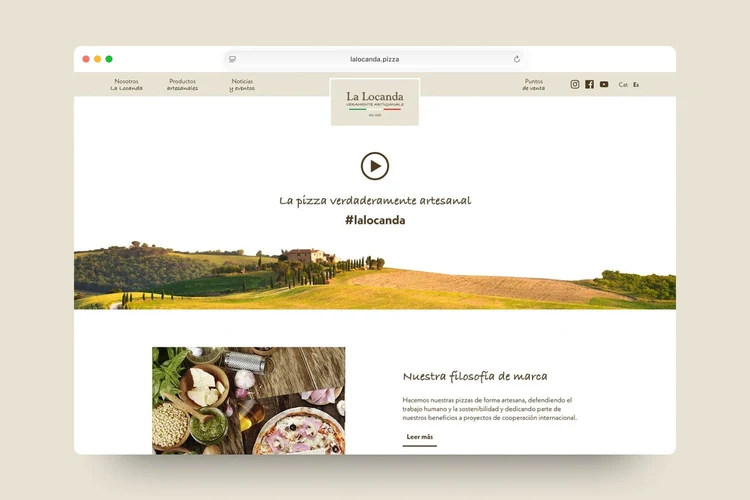
Creating a website or online shop is one of the most important investments a business can make in 2026. How much does a website cost in Spain? The average agency cost is €1,500, with prices ranging from €1,000 to €5,000. The wide range reflects how much the price can vary depending on the platform used, the number of pages and languages, the features required and the degree of customisation. This article explores the most popular tools, the steps involved in creating a website and typical price ranges in the Spanish market.
How much a website or online shop costs in Spain in 2026
Prices charged by agencies to develop a website or online shop depend on several factors. Broadly, price ranges follow these parameters:
Website prices by number of pages:
Basic website, 3–5 pages: €1,000–€2,000.
Medium website, 5–15 pages: €2,000–€5,000.
Large website, over 15 pages: €5,000–€10,000 or more.
Website prices by features:
Basic online shop: €1,500–€2,500.
Premium online shop: €2,500–€5,000.
Premium online shop with custom features: €5,000–€15,000.
Website prices by template customisation:
Basic design, with a lightly modified template: €1,000–€2,000.
Custom design, created separately: €2,000–€10,000.
Additional costs, often included in an agency’s total quote:
Copywriting: €50–€300 per page.
AI-generated photography: €100–€500.
Basic SEO: €300–€600.
Advanced SEO: €600–€2,000.
Popular website and online shop platforms and their associated costs
The platform used to develop a website has a significant effect on the final cost and the project’s outcome. Choose a platform around the website’s specific needs: each offers different advantages. These are the recommended platforms depending on your website’s purpose:
WordPress:
Ideal for: Corporate websites, blogs, online shops and platforms with complex features.
Associated costs: Although WordPress itself is free, you need hosting from €5 a month, a domain from €10 a year and, in many cases, premium themes and plugins between €50 and €200. It also needs regular maintenance: updating WordPress, plugins and the theme, making backups and checking that everything works. We recommend a quarterly review; a six-monthly review may be considered for simple sites. Urgent security updates should be handled sooner, without waiting for the next review. As a guide, allow €200–€400 a year for basic maintenance; costs may be higher depending on frequency and the services included.
Pros: Maximum flexibility to customise your website and create bespoke features.
Cons: Technical maintenance is required. Outdated versions increase the risk of a vulnerability being exploited to inject malicious code: unusual redirects or content may appear, or the site may stop working. Some changes need a professional, and as the site grows, code and plugins may need optimisation to maintain good speed.
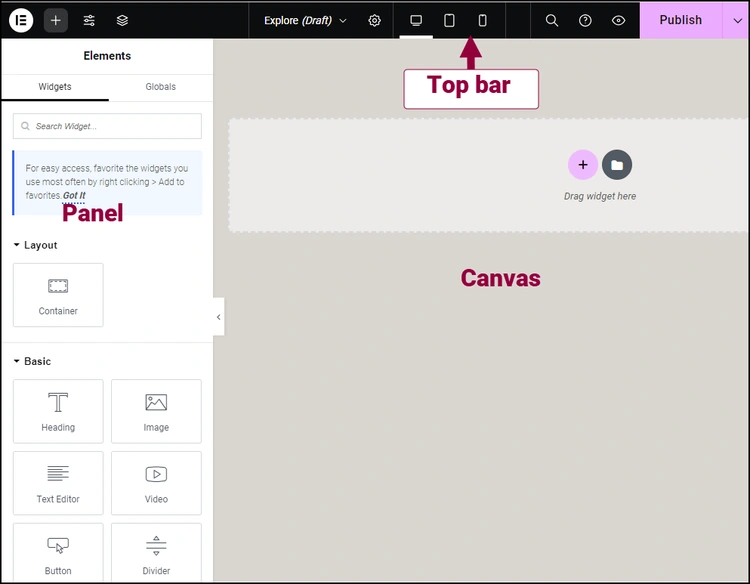
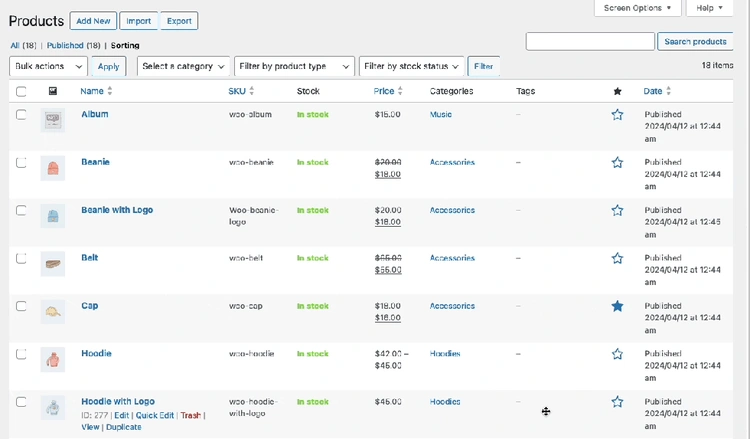
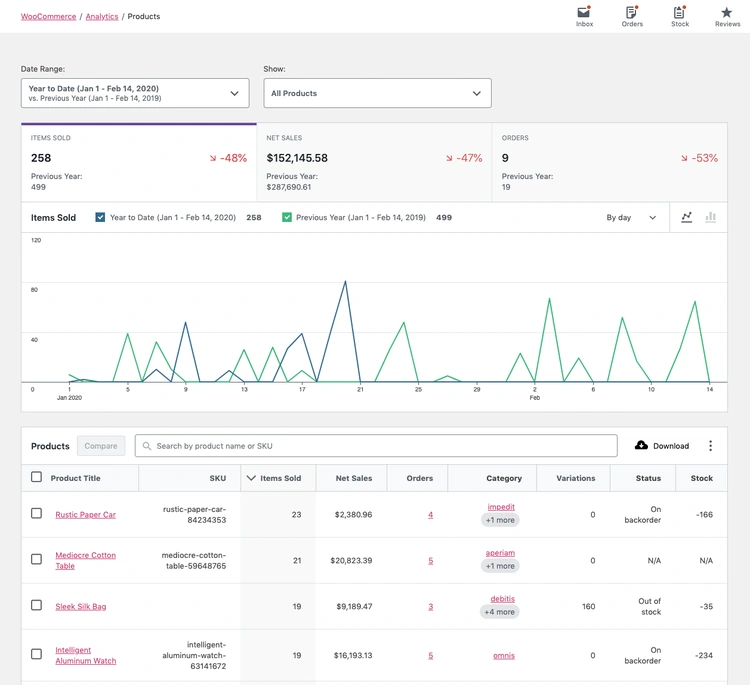
Inside WordPress and WooCommerce
Select a screenshot to enlarge it and browse the others. The interface may vary by version and setup.

Shopify:
Ideal for: Online shops of any size.
Associated costs: Monthly plans from €29 to €299, plus transaction fees and possible additional app costs. Professional maintenance is not required.
Pros: A powerful ecommerce platform with an intuitive interface, many easy-to-install plugins and detailed reporting. It is a strong choice for large product catalogues and growing online sales.
Cons: Some custom features require a specialist developer.
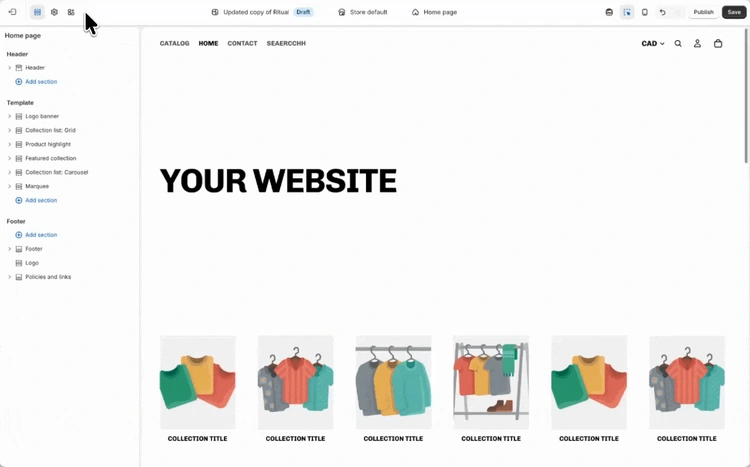
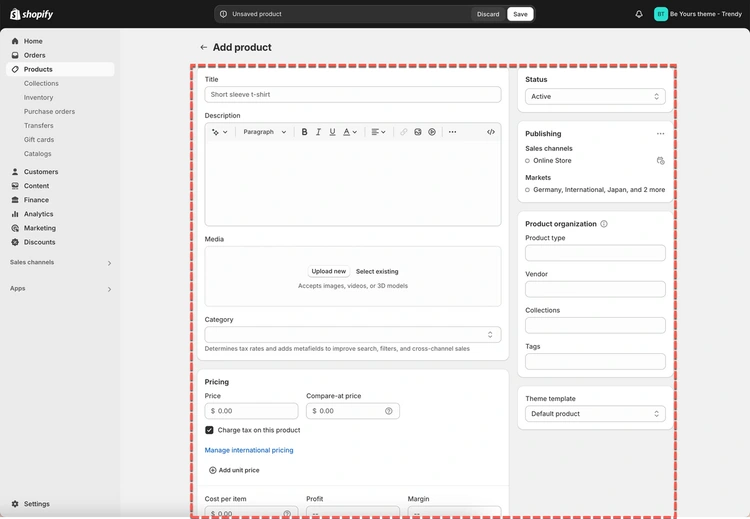
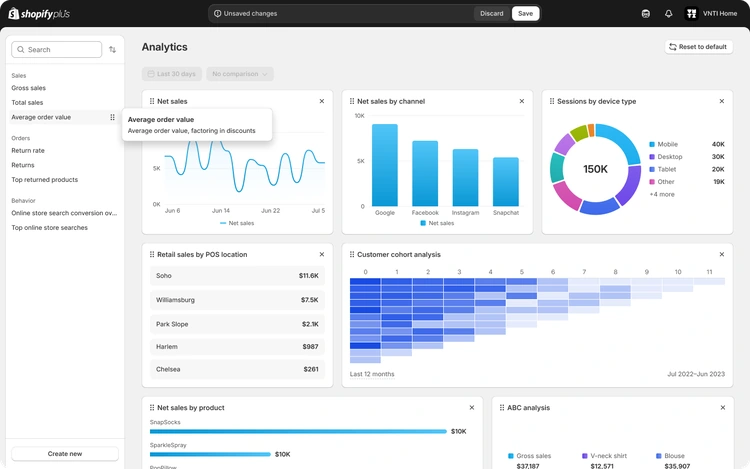
Inside Shopify
Select a screenshot to enlarge it and browse the others. The interface may vary by version and setup.
Squarespace:
Ideal for: Visually focused websites, blogs and online shops with small product ranges.
Associated costs: Monthly plans from €11 to €36, including hosting and templates. Professional maintenance is not required.
Pros: A simple, intuitive platform for managing websites and blogs yourself.
Cons: Custom features are difficult to add. Native translation is provided through a relatively expensive plugin.
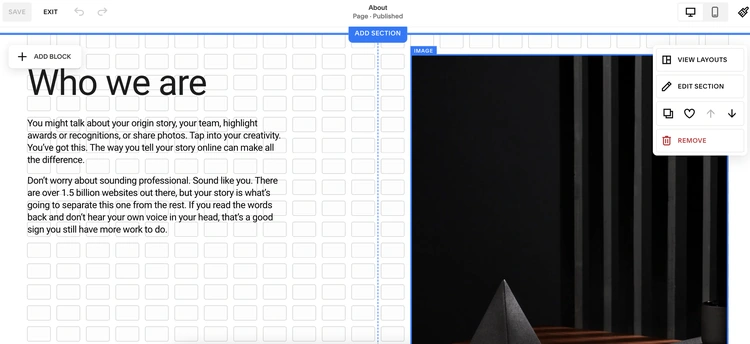
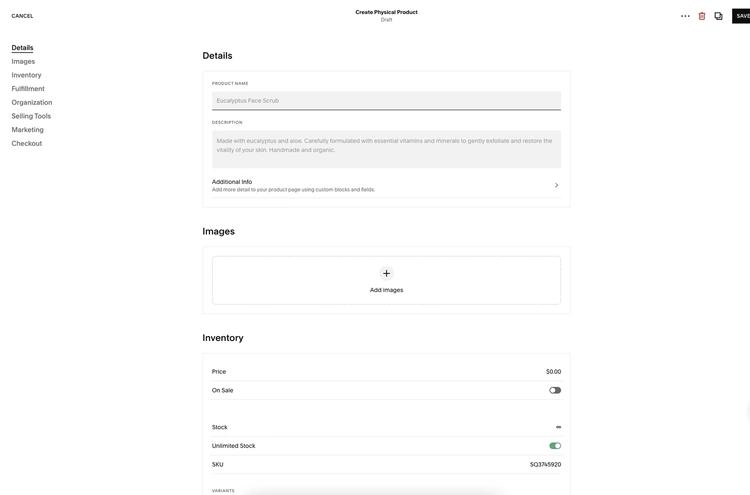
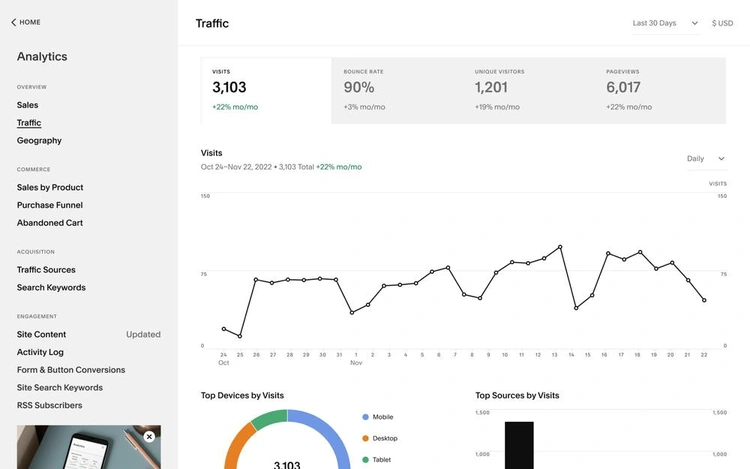
Inside Squarespace
Select a screenshot to enlarge it and browse the others. The interface may vary by version and setup.
Steps to create a website or online shop
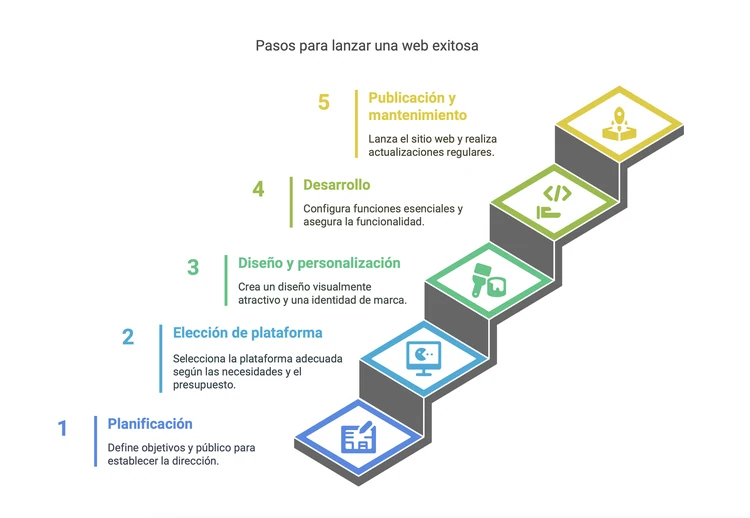
1. Planning:
Define your goals and and target audience.
Decide on the type of content corporate website, blog, online shop or appointment booking
Define the features you need such as category filters, external software integrations or interactive maps.
Choose the number of languages.
2. Choosing a platform:
Choose between content management systems such as WordPress, Shopify or Squarespace according to the project’s needs.
3. Design and customisation:
Choose and customise a template or design from scratch.
Design visual elements such as logos and and graphics.
Choose and adjust the typography.
Choose or produce photographs that make an impact.
4. Development:
SEO structure: Define keywords and establish a clear heading hierarchy: h1, h2 and h3.
Content setup: Importing catalogues, uploading images, writing copy, translating content and more.
Metadata: Complete the metadata for every page and add ALT text to all images.
Install key features such as payment gateways, plugins, social integrations, pixels and analytics code.
Run tests to check that everything works correctly: forms, purchases, post-purchase emails and platform integrations.
5. Launch and maintenance:
Launch the website and carry out regular maintenance for updates or improvements.
Key factors to consider when creating a website
Before deciding how much to invest, consider the role your website will play. According to the INE survey on ICT and ecommerce, 29% of Spanish businesses with 10 or more employees made ecommerce sales in 2025. If your goal is also to sell online, the catalogue, payments and order management should be included in the budget from the outset.
Clear goals: Define what you want the website to achieve: sales, visibility or branding. It helps to prepare a brief with your preferred structure and examples of websites that inspire you. This aligns expectations and makes development easier.
Usability: Make sure the website is easy to navigate for users, with clear copy and appealing images and optimised around what the user wants to do.
SEO strategy: Research keywords that help your audience find your website in search engines or AI assistants. Then establish a clear heading hierarchy and include your target keywords in copy and metadata for pages and images.
Loading speed: A slow website can harm user experience and SEO. This depends on factors such as image and video optimisation, alongside technical considerations such as clean code and good hosting.
Maintenance: Consider the cost, time and training needed to keep the website up to date.
When should you hire an agency to create a website?
Complex projects: If you need advanced integrations, large websites or shops with many pages or products, a premium custom design or bespoke features.
Limited time or experience: If you do not have the technical knowledge or time for design and development. An agency can also speed up the process, with specialists handling different tasks efficiently in parallel.
SEO and marketing needs: An agency can organise and strengthen your copy with a strategic approach to SEO and and marketing, making content useful, appealing and well positioned in search engines.
Brand consistency and design quality: Agencies keep the visual and narrative elements of your website consistent with your brand identity. They can also provide high-quality design, photography or video to give your website a more professional appearance.
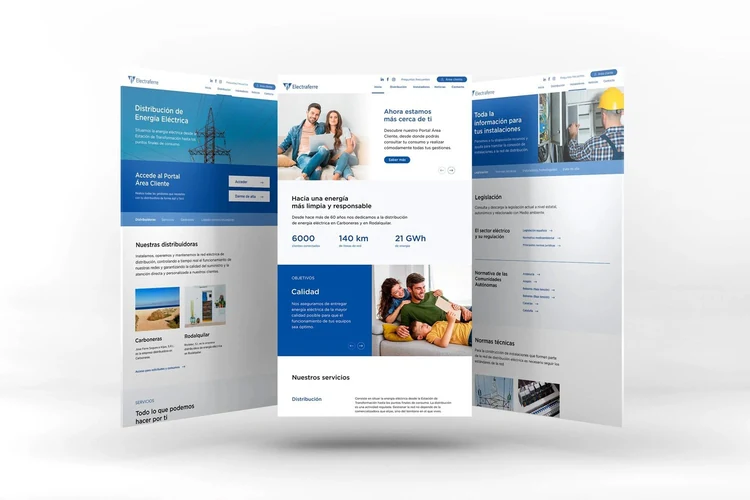
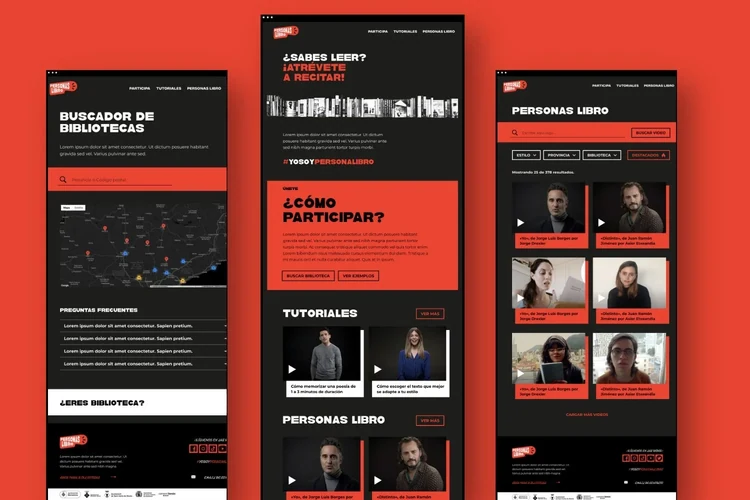
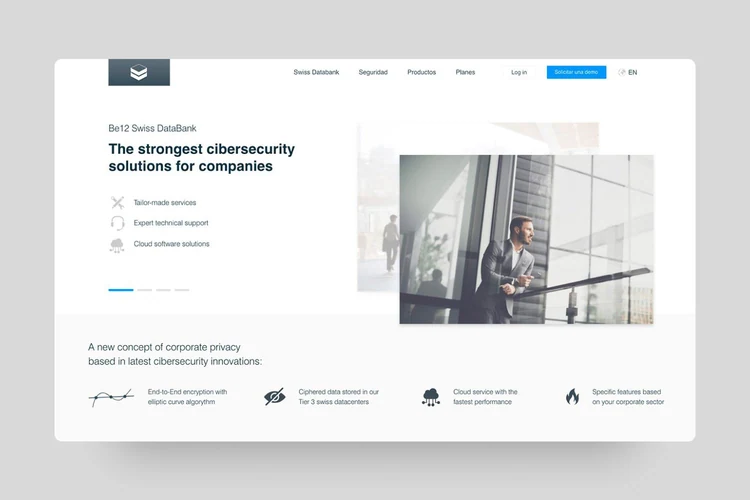
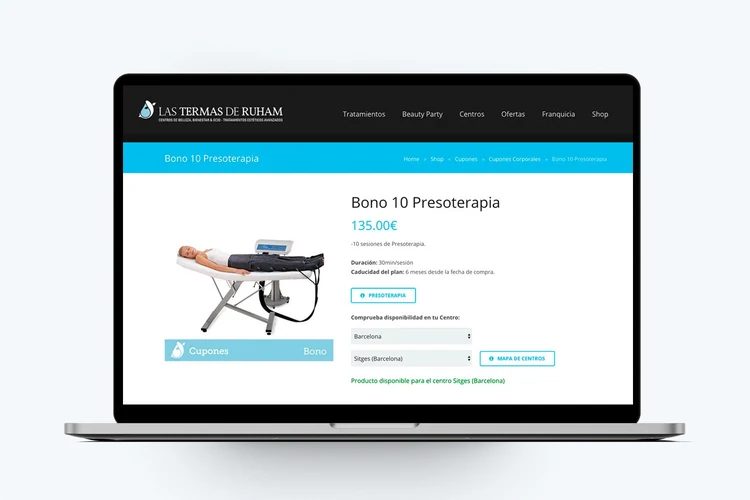
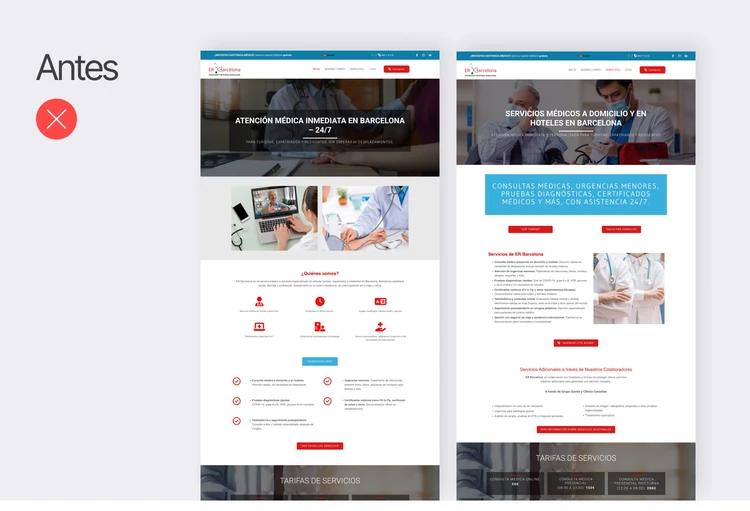
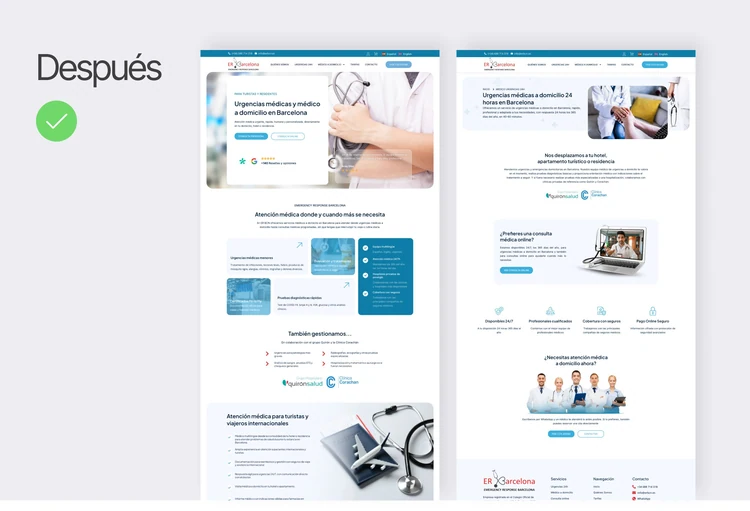
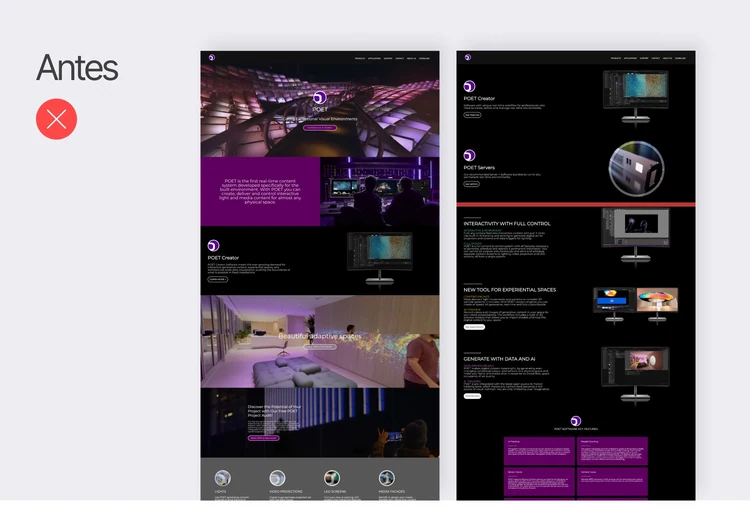
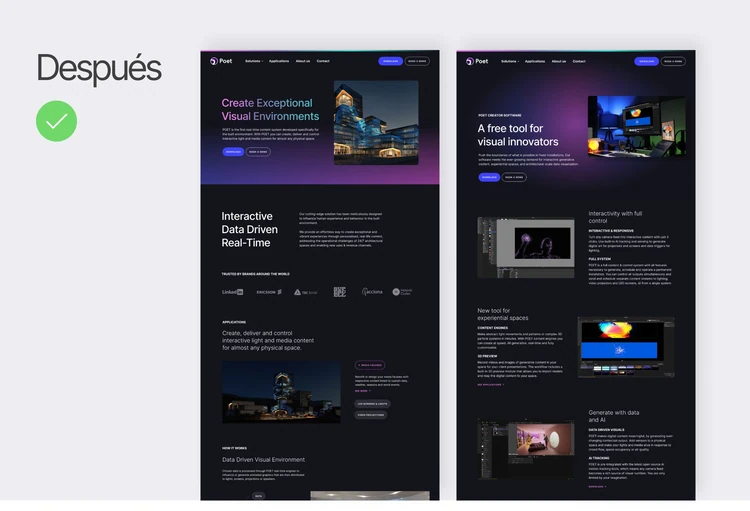
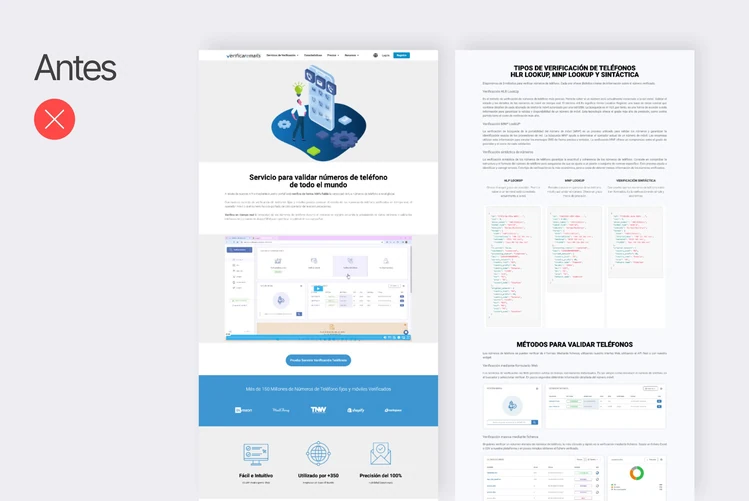
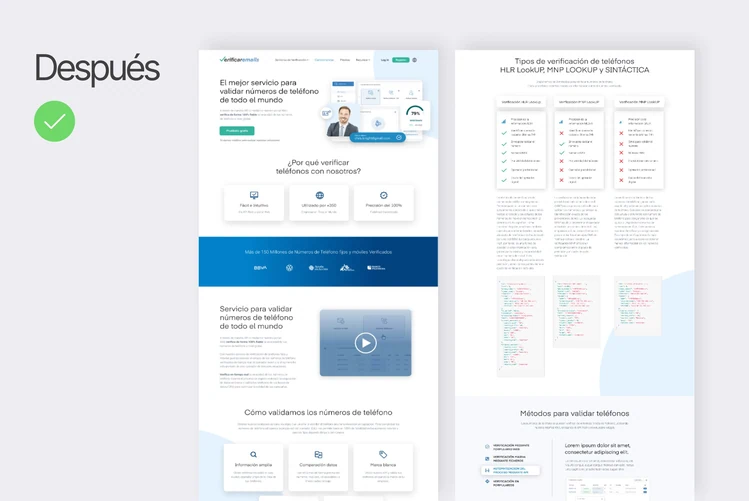
Before and after: website redesigns by Abstract
These are some of our website redesign projects. A new website can improve much more than its appearance: it can clarify what you offer, organise your services and make your value clear at a glance.
ER Barcelona
POET Creator Software
Verificaremails
Website pricing FAQ
How much does a website cost in Spain?
Website prices in Spain vary considerably by project. As a guide, a professional website typically costs €1,000–€3,500, while an online shop may cost €2,000–€6,000 or more. It depends on complexity, features and the level of customisation.
Why do website prices vary so much?
Because websites are not all the same. Prices vary with page numbers, features such as ecommerce, bookings and integrations, design and platform. You are paying not just for a website, but for how it works within your business.
What is included in the price of a website?
Usually design, development, page structure and basic configuration. Some quotes also include basic SEO, legal text or training. More advanced services are quoted separately.
Which platform is best for a website?
It depends on your project. WordPress suits more complex, customised sites; Shopify is a strong choice for online shops; and Squarespace works well for simpler, visual websites. Choose around your current needs and future growth plans.
How long does it take to build a website?
Development time depends on complexity. A simple website may be ready in two or three weeks, while a corporate website or online shop may take four to eight weeks.
Can an affordable website still work well?
Yes, with some qualifications. A simple project can cost less, but if you need to attract customers or sell online, a little more investment can make a meaningful difference.
Is a template or a custom website better?
Templates cost less and are quicker to implement, but have limitations. Custom design lets you stand out and tailor the website to your business, although it requires more investment.
Will I need maintenance afterwards?
Yes, especially with WordPress. Regular plugin updates, backups and functional checks are recommended. Shopify and Squarespace require much less technical maintenance, but content and performance still need attention.
Is SEO included in a website project?
Basic SEO is usually included: structure, metadata and initial optimisation. To build stronger Google visibility, you will need a more comprehensive medium-term SEO strategy.
When is hiring an agency worthwhile?
When your website matters to your business, you need to stand out and you want it to turn visits into customers, rather than simply look good.